Showing posts with label WednesdayClass. Show all posts

Wednesday, 17 June 2015

Week 9 Wednesday 端午节 Dragon Boat Festival


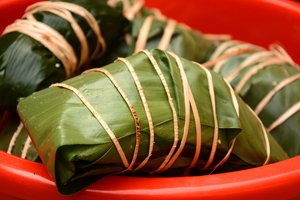
Zongzi

五月五, 过端午, falls on the fifth day of the fifth month on Chinese lunar calendar,  端午节 dragon boat festival is the third largest festival in China. It is a tradition that started more then 2000 years ago. In our lesson, we watch a short video on the dragon boat festival and learn about 粽子(Chinese sticky rice dumpling),龙舟 (dragon boat race).

You can find the legend of dragon festival here.

We practiced some senates base on the new phrases we learnt today, such as

我喜欢吃粽子 I loke eating tricky rice dumpling.
我会划龙舟 I can row dragon boat.


Wednesday, 27 May 2015

Term 2 Week 5 (Wednesday) 我喜欢弹钢琴, 我天天都弹钢琴 Wǒ xǐhuān dàn gāngqín, wǒ tiāntiān doū dàn gāngqín

Today we learnt a sentence pattern on repetition, such as 我喜欢弹钢琴, 我天天都弹钢琴. In this example, 弹钢琴 (dàn gāngqín) play piano is the activity that I like, and I play it everyday. The same sentence could be applied to another activity, 我喜欢打网球, 我天天都打网球 (Wǒ xǐhuān dǎ wǎngqiú, wǒ tiāntiān doū dǎ wǎngqiú) I like playing tennis, I play tennis everyday! 

We also learn a new word 会 Huì (Can) and 不会 Bùhuì (Cannot). Some examples are:

弹钢琴 Wǒ huì dàn gāngqín (I can play piano)
不会弹钢琴 Wǒ bù huì dàn gāngqín (I cannot play the piano)

弹钢琴吗? Nǐ huì dàn gāngqín ma(Do you play the piano?) In this case, This has turned into a question by adding 吗 at the end. 


You can practice the sentences here.

Wednesday, 20 May 2015

Term 2 Week 6 (Wednesday) 下课后,你做什么? Xiàkè hòu, nǐ zuò shénme? What do you do after class?


This week the students were asked to draft out their weekly schedule, some of them were very busy indeed. The main sentence focus this week is 下课后,你做什么?(Xiàkè hòu, nǐ zuò shénme?) What do you do after class? We also had a chance to review our days of the week - 星期一,星期二, 星期三, 星期四, 星期五 (Xīngqí yī, xīngqí'èr, xīngqísān, xīngqísì, xīngqíwǔ(Monday to Friday)

After a group discussion among themselves, this is what they come out with:

弹钢琴 play piano
打排球, play volleyball
游泳,swimming
踢足球,soccer
回家休息,go home and rest
学跆拳道,taekwondo
学空手道, karate
芭蕾舞蹈 ballet

I'm happy to say that there were very creative in their plans with some beautiful illustrations!

Wednesday, 13 May 2015

Term 2 Week 4 (Wednesday) “送了......给......" (“Sòngle...... Gěi......") Give...to

Welcome to week 4. Today we focus on more sentences. Some key words we learnt today are:

送 / 送了 (Sòng / Sòngle) Give
给 (Gěi) To

Our sentences are:

(Person) 送了 (object) 给 (gift receiver). For example 姐姐送了一个书包给我 (Jiějiě sòngle yīgè shūbāo gěi wǒ) My sister give me a bag. In this example, the person is 姐姐 (sister), the gift is 一个书包 (a school bag) and the gift receiver is 我 (me)
  • 哥哥送了巧克力我 (Gēgē sòngle qiǎokèlì gěi wǒ) my brother give me some chocolate
  • 妈妈送了新外套爸爸 (Māmā sòngle xīn wàitào gěi bàba) Mom give dad a new jacket.
We also learn the alternative sentence pattern which carries the same meaning. Example are:
  • 哥哥巧克力 In this case, the gift receiver have been moved forward straight after "give". 哥哥 is the giver,  is the gift receiver and 巧克力 is the gift.
  • 妈妈爸爸 新外套 - 妈妈 is the giver, 爸爸 is the gift receiver and 新外套 is the gift.

Wednesday, 6 May 2015

Term 2 Week 3 (Wednesday) 我参加音乐 Wǒ cānjiā yīnyuè I took part in music


Our sentence focus this week are:


  • 我参加音乐 (Wǒ cānjiā yīnyuè) I participate in music
  • 你参加了什么? (Nǐ cānjiāle shénme?) What activities do you take part in?
  • 我参加音乐,参加运动 (Wǒ cānjiā yīnyuè, yě cānjiā yùndòng) I take part in music and also sports
  • Tony 和我想参加网球队 (Tony hé wǒ dū xiǎng cānjiā wǎng qiú duì) Tony and I both want want to take part in tennis
You can practice these sentences HERE.


Thursday, 30 April 2015

Term 2 Week 2 (Wednesday) 学校活动 School Activities Cont


Well is hard to come back after a long weekend, the children certainly thrill to have a short week this week.

We made some great progress in learning today and I can certainly see the improvement for those of you who has been using the CD so keep up the good work. The new words today are:


休息 - Rest

參加 - To participate

乐队 - school band

活动 - Activities

想 - thinking of...wish
得 - have to

You can practice to read along here.

Homework this week is item 7 page 17 in the work book, have fun writing those characters!


Tuesday, 28 April 2015

Term 2 Week 1 (Wednesday) Welcome Back!

Ni Hao! 你 好! Welcome back to the start of term 2. I believe all of you have had a lovely holiday over the term break and is eager to learn again. We shared some lovely stories on what we have done over the holiday and the children sure have lots to tell. We will continue to discuss our last term topic - school / After School Activities (学校活动) and the associated language focus.

Today we practice a lovely song 媽媽的眼睛 for Mothers Day, click on the link to sing along, You can also find the lyrics here

Finally, a quick reminder on drawing competition - last chance to hand it in this week before Saturday 2 May. Good luck!


Monday, 30 March 2015

Week 8 (Wednesday) 学校活动 School Activities

We all lead a very busy life, in particular our children, who have a series of after school activities everyday. This week we looked at some of the popular activities such as Piano lesson, football, ballet, taekwondo, Mandarin lesson, swimming etc. Here are the list of activities we practiced today:

学中文 (Xué Zhōngwén) -   Mandarin lesson
学吉他 (Xué jítā) - learn guitar
游泳 (Yóuyǒng) - Swimming
跆拳道 (Táiquándào) - Taekwondo
篮球 (Lánqiú) - basketball
体操 (Tǐcāo) - gymnastics
学钢琴 (Xué gāngqín) - Piano lesson
足球 (Zúqiú_ - football
学芭蕾舞 (bālěi wǔ) - ballet 

Please complete the worksheet here. Some of you might have completed during class so please remember to bring it back this week.

The sentence structure of the week is 下课后,我得... (xià kè hòu , wǒ Déi...)

下课后,我得学中文 (xià kè hòu , wǒ déi Xué Zhōngwén) - After school, I have Mandarin lesson.

Homework for the week is the passage on page 17 of text book. You can practice all the new words in the reading set here.

Have a lovely week!


Saturday, 28 March 2015

Week 7 (Wednesday) My Family - Learning Radicals

We had a quick test on recognising the family members today, and I'm proud to say that quite a number of you have achieved 10/10, what a great effort!

We looked at some new radicals today and how they appear in characters, they include 言 radical and the associated words 说, 请, 谢, 课 (say, please, thank you, lesson), as well as 女 radical with 婆, 妈, 姨 (grandma, mother and aunt).

Drawing Competition


The children have been issued with an A3 paper for their drawing competition. They can work on it during the school holiday and hand in their entry at the start of Term 2. Students are free to choose the theme of their work and may use any medusa they wish.

I look forward to seeing all the wonderful works after the school holiday.


Thursday, 12 March 2015

Week 6 (Wednesday Class) My Family Members 我的家人 Cont.

This week we review the terms on our word cards. The children can now recognised most of the characters in the card. You can give them a little test by using the word cards here. We also played a word messenger games where the students relaying the words and recite them afterwards. It was a lot of fun and our two groups are always trying to outdo each other!

We also practice sentence making this week using "是...也是" (Shì...yě shì) meaning "is...is also". The children are asked to find a sentence example this week that uses the same term. Have a go and see what they come out with.

The children have also been issued with a G300 CD this week. This is a study aid for the series and it contains reading practice, quizzes, and games. Please take some time to go through it with them and let me know if you have any questions.

The homework for the week is on page 3 Q4 and Q5 and page 5 Q8 where they can practice writing some of the new words learnt.

Have a good week!

Sunday, 8 March 2015

Week 5 (Wednesday Class)  My Family Members 我的家人


Week five already! This week we learnt everything about family tree and the various salutation of the relatives. I particularly enjoyed the family tree presentation by our students, good work! 

We talked about the different between the grandparents from both mom's side and dad's side and why mom's mom is called 外婆 (Wàipó) and mom's dad is called 外公 (Wàigōng) whiles days mom is call 奶奶 (Nǎinai) and dad's dad is called 爺爺 (Yéyé). You can practice reading each of the character and the lesson flash cards here. To practice reading, click here for the passage.

Our language focus this week is 是....也是 (Shì,,, yěshì). For example 她我的中文老师, 也是我哥哥的中文老师 (She is my Chinese teacher, she is also my brother's Chinese teacher). We are also able to separate the relatives into male 男 (Nán) or female 女 (Nǚ). Quick tips - in some Chinese characters you can tell by the radical (部首). For example if the character shows the radical 女, such as 姐, 媽, 姨, 奶奶, 妹妹 (older sister, mother, aunty, grandma, younger sister), it is certain that the gender is female. 

This week's homework is on page 2 of their workbook, question 2. Students are require to separate all the maternal relatives and paternal relatives into the 2 spaces provided. Have fun!


Wednesday, 25 February 2015

Week 4 (Wednesday Class) Family Tree 家族树


Well I hope not all the family trees are as complex as this one. This week we had fun finding out all the different names of the immediate and extended family members. Don't be surprise if your children get a little bewildered with the intertwine web of Chinese family tree. They all enjoyed watching the short video clip about Chinese family tree, it was very funny!

Today's sentence focus is 都是 (Dōu shì) meaning all are. Example of using 都是 - 
我的哥哥,姐姐和我都是爸妈的孩子 My brother, sister and I are all my parents children.
We have sent home a small assignment of drafting out the family tree. I have requested a simple version to begin with which should include immediate family, as well as grandparents from both mum band dad's side. I hope you enjoy helping them in the process. A copy of the worksheet can be found here. Please also practice reading on page 4 of the text book. Have a good week!